The worst part about researching online casinos isn’t finding options—it’s figuring out which ones won’t disappear with your money. Every week I see questions from players who deposited at some flashy casino with impossible bonuses, won a few hundred dollars, then suddenly couldn’t withdraw. Support stopped responding. The live chat went dead. The casino continued operating normally for everyone else, but this particular player got ghosted.
I’ve been navigating Canadian online gambling long enough to recognize the patterns that separate legitimate operators from operations designed to extract money while providing minimal service. The difference isn’t always obvious from marketing materials or website design. Scam casinos often look more polished than reputable ones because they invest heavily in appearance rather than infrastructure.
What Legitimate Actually Means
When I say “legitimate casino,” I’m describing operators that meet specific criteria distinguishing them from questionable alternatives:
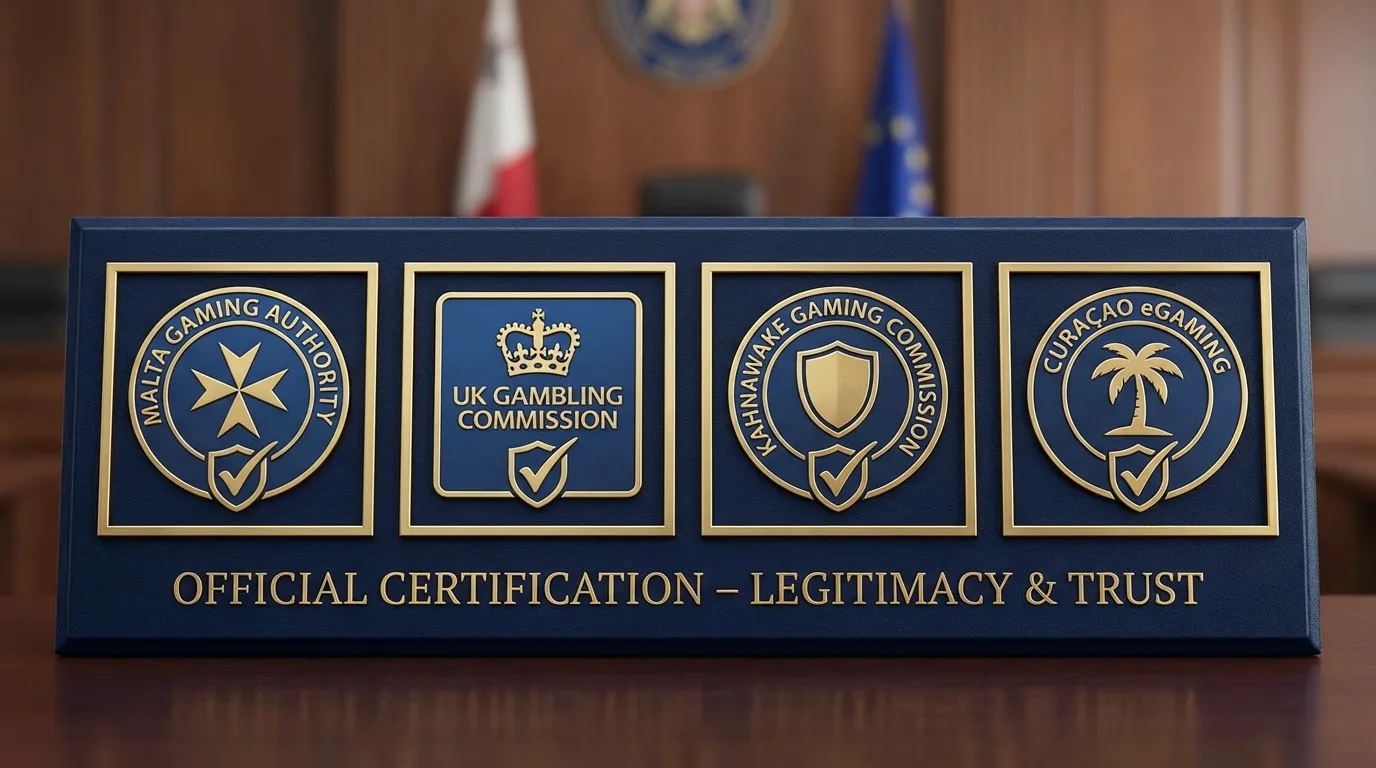
- Licensed by recognized authorities—Malta Gaming Authority, UK Gambling Commission, Kahnawake Gaming Commission, Curaçao eGaming, or provincial Canadian regulators. These licenses require background checks, financial audits, and ongoing compliance monitoring.
- Proven payout history—they’ve operated for years paying winners consistently. You can find real player reviews from multiple sources confirming withdrawals process as advertised.
- Transparent terms and conditions—bonus requirements, withdrawal policies, game rules are clearly stated without hidden traps in fine print designed to void winnings.
- Reliable customer support—they actually respond when you contact them. Issues get resolved through established processes rather than ignored until you give up.
- Fair gaming practices—they use certified Random Number Generators (RNGs), publish RTP rates, allow independent auditing, and don’t manipulate results to prevent payouts.
The canadian casinos for real money landscape includes both excellent operators meeting all these criteria and terrible ones meeting none. Your job is distinguishing between them before depositing.
The Licensing Reality
Casino licensing confuses players more than almost any other aspect of online gambling. Not all licenses indicate equal legitimacy.
Tier 1 licenses come from Malta Gaming Authority (MGA) and UK Gambling Commission (UKGC). These regulators enforce strict requirements—substantial operating capital, segregated player funds, regular audits, transparent reporting. Getting licensed by MGA or UKGC means something. Casinos pay significant costs maintaining these licenses, creating financial incentive to operate ethically.
Kahnawake Gaming Commission operates from Mohawk territory in Quebec under federal Canadian authority. Their licensing standards are solid, and many reputable casinos serving Canadian players hold Kahnawake licenses. They’re particularly relevant for Canadian players because the regulator understands Canadian gaming law.
Curaçao licenses vary wildly in quality. Curaçao offers multiple licensing authorities, and some are rigorous while others barely verify basic information. A Curaçao license doesn’t automatically indicate a scam, but it requires additional due diligence. Many excellent casinos hold Curaçao licenses alongside more prestigious ones. Many terrible casinos hide behind Curaçao licenses as their only regulatory oversight.
Provincial Canadian licenses from Ontario’s iGaming Ontario (iGO), BC Lottery Corporation, or Loto-Québec provide maximum legitimacy for Canadian players. These operators function under Canadian law with provincial government oversight. If something goes wrong, you have actual recourse through Canadian channels.
No license means run away immediately. Unlicensed casinos operate without oversight, accountability, or consequences for cheating players. Some might pay winnings if you’re lucky, but you have zero recourse when they don’t.
Verifying Licensing Information
Casinos claiming licenses often post fake information hoping players won’t verify. Checking takes two minutes and prevents disaster.
- Find the licensing information in the casino’s footer or “About Us” section. Legitimate operators display license numbers, regulatory logos, and links to their licensing authority’s verification page.
- Visit the regulator’s website directly—don’t just click the casino’s links. Navigate to the licensing authority’s official site through search and find their license verification tool.
- Input the license number into the regulator’s database. Confirm the casino name matches exactly, the license is active (not suspended or revoked), and the license covers the specific gambling activities the casino offers.
- Check the issuance date. Licenses issued recently for casinos claiming years of operation indicate potential issues—maybe they operated unlicensed previously and just got legitimate, or they lost a previous license and had to re-apply.
- Look for multiple licenses. Top casinos often hold licenses from multiple jurisdictions. A casino licensed by both MGA and UKGC demonstrates commitment to meeting strict regulatory standards.
If you can’t find licensing information, or verification fails, or the casino refuses to provide details—walk away. Plenty of legitimate alternatives exist.
Red Flags That Scream Trouble
Certain patterns indicate problematic casinos. Learning to recognize them prevents expensive mistakes.
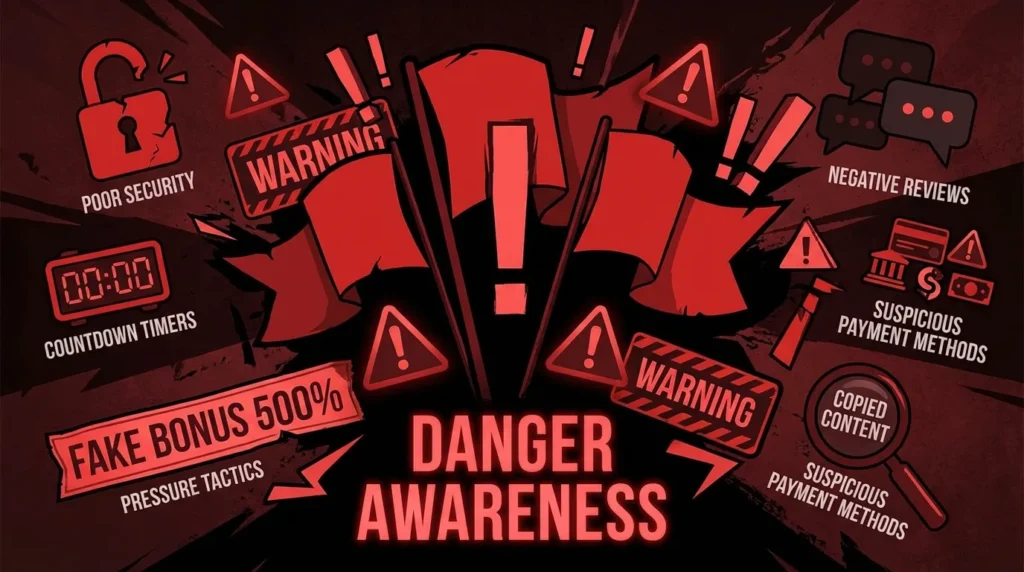
Unrealistic bonus offers promising 500% match bonuses or thousands in free spins always come with impossible wagering requirements or other terms making them worthless. Legitimate casinos offer competitive bonuses, not impossible ones.
Vague or absent terms and conditions prevent you from understanding how the casino operates, what rules apply, or what happens in disputes. Legitimate operators publish clear, detailed terms.
No clear withdrawal policy or confusing explanations about how to cash out winnings suggest the casino intentionally makes withdrawals difficult. Good casinos explain their withdrawal process transparently.
Poor website security—check for HTTPS encryption (the padlock in your browser’s address bar). Any casino handling financial transactions without proper encryption should be avoided immediately.
Limited payment options restricted to obscure methods or cryptocurrency-only can indicate difficulties with payment processors who refuse to work with problematic operators.
Negative reviews focusing on withdrawal issues are the most important red flag. One negative review could be a disgruntled player. Dozens describing identical problems (delayed withdrawals, ignored support requests, voided winnings) indicate systematic issues.
Pressure tactics pushing you to deposit immediately through countdown timers, “exclusive limited time” offers that never expire, or aggressive marketing suggest desperation for your money.
Copied content stolen from other casinos’ websites indicates low-effort operations. Legitimate casinos invest in original content describing their unique features.
Established Operators with Proven Track Records
Starting with casinos that have operated successfully for years provides a safety baseline. They’ve paid out millions in winnings, survived market changes, and built reputations worth maintaining.
- Jackpot City Casino launched in 1998 with Malta and Kahnawake licensing. Over two decades of operation without major scandals, consistent withdrawal processing, responsive customer support. They’re not perfect, but they’re reliably legitimate.
- Spin Casino has operated since 2001, also with Malta licensing. Microgaming partner casino with extensive game library, reasonable bonus terms, established payout procedures. Long track record matters when trusting a casino with your money.
- 888 Casino dates to 1997 with Gibraltar and UK licensing. Public company traded on London Stock Exchange, which adds transparency and accountability that privately held casinos lack. Their business model requires maintaining reputation.
- LeoVegas won multiple awards since launching in 2012. Newer than the above but grew rapidly through legitimate quality rather than deceptive marketing. Malta and Sweden licensing, established payment procedures, responsive support.
- Royal Vegas is part of the Fortune Lounge group, operating since 2000. Malta licensed, Microgaming partner, long history serving Canadian players specifically.
These aren’t the only legitimate options—dozens more exist. But starting with established operators reduces risk while you develop judgment for evaluating newer alternatives.
The Provincial Safety Net
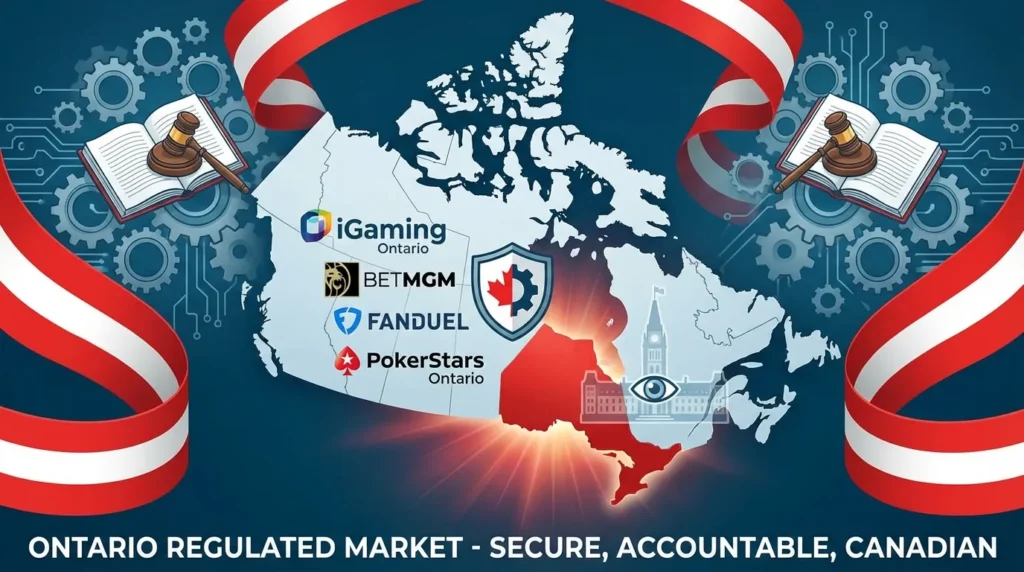
Ontario’s iGaming Ontario creates the safest real money gambling environment currently available to Canadians. Casinos licensed through iGO operate under provincial regulation with Ontario-specific consumer protections.
BetMGM Ontario, FanDuel Casino, PokerStars Ontario, bet365, and other major brands operate under iGO licensing. These casinos follow stricter rules than offshore operators—segregated player funds, mandatory responsible gambling tools, clear dispute resolution processes.
The advantage for Ontario players: if something goes wrong, you escalate through Canadian regulatory channels. Your funds are protected by Ontario-specific safeguards. The casino faces real consequences from provincial regulators if they violate rules.
Other provinces don’t offer this yet. BC has PlayNow (BCLC), Quebec has Espacejeux (Loto-Québec), and Manitoba has their provincial site. These government-run platforms provide absolute security but limited game selection and conservative bonuses.
Alberta is working toward licensing private operators similar to Ontario’s model. Until that happens, most Canadian provinces exist in the current state where provincial sites provide maximum security while international casinos provide variety and value.
Payment Method Verification
How a casino handles payments reveals a lot about legitimacy. Reputable operators offer multiple established payment methods because legitimate payment processors vet casinos before partnering.
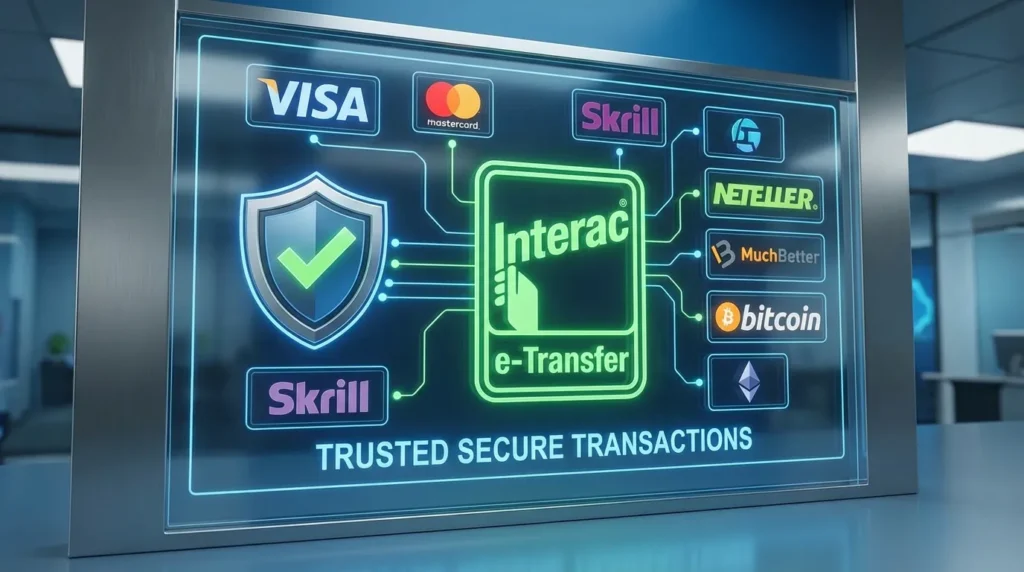
Interac e-Transfer acceptance at Canadian casinos indicates at least baseline legitimacy. Canadian banks and Interac work with established operators, not obvious scams.
Credit card processing from major card networks (Visa, Mastercard) suggests the casino passed the card processor’s risk assessment. Processors drop casinos with excessive chargebacks or fraud complaints.
Established e-wallets like Skrill, Neteller, or MuchBetter only partner with licensed operators. If a casino accepts these methods, they’ve passed the e-wallet provider’s due diligence.
Cryptocurrency-only casinos aren’t automatically scams, but they warrant extra scrutiny. Legitimate businesses sometimes prefer crypto for philosophical or regulatory reasons. But scam operations love crypto because transactions are irreversible and harder to trace.
Obscure payment methods nobody recognizes suggest the casino couldn’t secure mainstream payment processing. Legitimate payment providers rejected them for risk reasons.
Check how quickly the casino processes withdrawals. Legitimate operators process within 24-72 hours after approval. Casinos taking weeks to process approved withdrawals are either incompetent or intentionally delaying hoping you’ll cancel and lose the money.
Customer Support As a Litmus Test
How a casino treats customer support inquiries before you deposit predicts how they’ll treat problems after you’ve given them money.
Test their support before depositing. Send a complex question and see how they respond. Do they provide detailed, helpful answers? Or do you get generic copy-paste responses that don’t address your question?
Check availability. 24/7 support isn’t mandatory, but casinos without clear support hours or those only available via email raise concerns. Live chat and phone support indicate investment in customer service.
Read support interactions in casino reviews. Players describe their experiences dealing with support. Patterns of ignored emails, unhelpful responses, or support ghosting players with withdrawal requests indicate systematic problems.
Look for escalation procedures. Legitimate casinos have clear processes for escalating unresolved issues—supervisor review, formal complaints, regulatory complaints. Lack of escalation paths suggests the casino doesn’t handle disputes fairly.
Game Fairness and RTP Verification
Legitimate casinos use certified Random Number Generators and publish RTP (Return to Player) rates. Shady operators manipulate results or refuse to disclose payout percentages.
Check for testing certifications from companies like eCOGRA, iTech Labs, Gaming Laboratories International (GLI), or Technical Systems Testing (TST). These independent testing companies verify RNG fairness and audit casino operations.
Look for published RTP rates. Reputable casinos display RTP percentages for their games. These might appear in game info screens or published on the casino’s website. Refusing to disclose RTP suggests they’re running games with terrible payout rates.
Use games from established providers. NetEnt, Microgaming, Playtech, Pragmatic Play, Evolution Gaming, and other major developers only license games to legitimate casinos. If a casino’s games come entirely from unknown providers, be skeptical.
Beware of “exclusive” games from generic white-label developers. Some casinos fill their libraries with low-quality slots from obscure providers that offer terrible RTPs and questionable fairness.
Reading Reviews Intelligently
Casino reviews help, but you need to distinguish genuine feedback from marketing and fake reviews planted by competitors or paid by the casino itself.
Check multiple sources. Don’t trust a single review site. Read player feedback from forums like Casinomeister, AskGamblers, and Reddit’s gambling communities where users discuss real experiences.
Look for specific details in reviews. Generic positive reviews (“Great casino! Highly recommend!”) with no specific information are likely fake. Real reviews mention specific games played, actual withdrawal times, details about support interactions.
Focus on withdrawal complaints. Every casino gets occasional negative reviews from sore losers. But if multiple independent reviewers describe identical withdrawal problems—delayed payments, ignored requests, voided winnings—that’s a pattern indicating real issues.
Check review dates. Old positive reviews might not reflect current operations if the casino changed ownership or deteriorated over time. Recent reviews provide better insight into current reliability.
Be skeptical of perfect scores. No casino is perfect. Reviews with nothing but praise and zero criticism are probably fake or incentivized.
The Bonus Trap
Generous bonuses attract players, but they’re also tools for trapping money. Understanding bonus terms prevents losing winnings to technicalities.
Wagering requirements determine how much you must bet before withdrawing bonus funds. Legitimate casinos set requirements at 20x-40x the bonus amount. Requirements above 50x are designed to be nearly impossible to clear.
Game contribution percentages mean different games contribute different amounts toward wagering. Slots usually contribute 100%, but table games might contribute only 10% or be excluded entirely. Playing blackjack with a slot-focused bonus could void your winnings.
Maximum bet restrictions during bonus play limit bets to $5 or less per spin/hand. Betting above this limit—even accidentally—can void your bonus and winnings. Legitimate casinos program their software to prevent violating this automatically. Shady casinos let you exceed limits then void winnings claiming rule violations.
Time limits give you specific periods (usually 7-30 days) to clear wagering requirements. Failing to clear within the timeframe forfeits bonus and sometimes winnings.
Maximum win caps limit how much you can win from bonus funds. Some casinos cap bonus winnings at $100 or $200 regardless of how much you actually won. Legitimate operators either skip this restriction or set it high enough not to affect most players.
Read complete bonus terms before claiming anything. If terms are confusing, unclear, or excessively restrictive, skip the bonus and deposit without it.
Building Your Own Casino Checklist
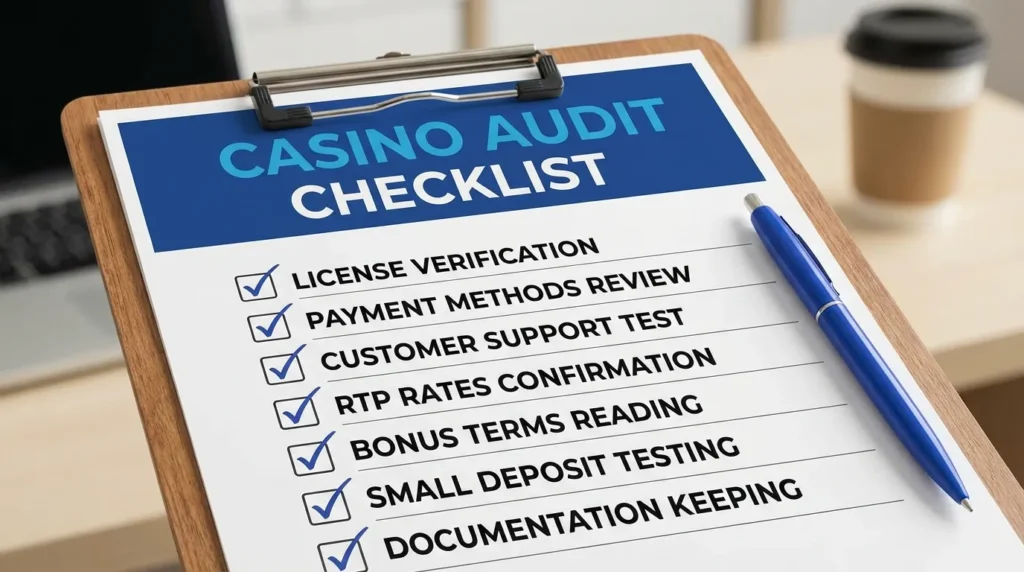
Rather than trusting any single source’s recommendations, develop your own verification process:
- Verify licensing through regulator’s official website
- Check reviews from multiple independent sources focusing on withdrawal experiences
- Test customer support with real questions before depositing
- Review payment options and withdrawal processing times
- Read complete bonus terms for hidden traps
- Confirm RTP rates are published and certified
- Start with small deposits to test withdrawal process before committing larger amounts
- Document everything—screenshots of terms, correspondence with support, transaction confirmations
This checklist won’t guarantee perfection, but it dramatically reduces the chance of depositing at problematic casinos.
When Things Go Wrong
Even at legitimate casinos, disputes happen. Knowing your recourse options beforehand helps resolve issues.
Contact casino support first with detailed documentation of your issue. Many problems resolve at this level through support escalation to supervisors or managers.
File formal complaints through the casino’s official complaint process if support doesn’t resolve things. Legitimate operators have documented complaint procedures.
Contact the licensing authority if the casino won’t resolve legitimate complaints. Regulators like MGA, UKGC, and Kahnawake have formal complaint processes for player disputes with their licensed casinos.
Use Alternative Dispute Resolution (ADR) services like eCOGRA if the casino participates. These independent mediators resolve disputes between players and casinos.
Share your experience through reviews on trusted casino forums. Public attention sometimes motivates casinos to resolve issues they previously ignored.
Accept losses on truly illegitimate casinos. If you deposited at an unlicensed casino or obvious scam, you likely have no recourse. Learn from the experience and move forward rather than chasing unrecoverable funds.
The Bottom Line
Finding safe canadian casinos for real money requires more diligence than seeing which casino advertises most aggressively or offers the biggest bonuses. The best casinos aren’t always the flashiest. They’re the ones that process withdrawals reliably, respond to support requests promptly, maintain proper licensing, and operate transparently.
Start with established operators proven through years of paying winners. Verify licensing independently rather than trusting casino claims. Read real player experiences from multiple sources. Test casinos with small deposits before committing significant money.
The Canadian online casino market includes both excellent legitimate operators and terrible scams designed to extract money while providing minimal service. Your ability to distinguish between them determines whether online gambling provides entertainment value or expensive frustration. Take the time to verify legitimacy before depositing. The few minutes spent researching prevent the weeks or months spent fighting for withdrawals from problematic casinos.
More Canadian Casino Payment Guides
Looking for other deposit options? Check out my guides on Interac e-Transfer casinos, eCheck casinos in Canada, Canadian casinos that accept PayPal, crypto casinos in Canada, and Google Pay casinos.