By Zavian Thornell, iGaming Writer & Content Specialist. I started tracking every gambling session three years ago. It changed how I play, how much I spend, and — honestly — how I think about risk. This is the guide I wish someone had handed me on day one.
Most Canadian players have no idea how much they spend gambling. Not because they’re irresponsible, but because the numbers are scattered — a C$50 deposit here, a C$100 withdrawal there, a C$20 bonus that turned into nothing. Without a system, it all blurs into “I think I’m about even.” Spoiler: you’re probably not.
Tracking your gambling spending takes five minutes per session. It costs nothing. And it’s the single most effective way to keep gambling as entertainment instead of letting it drift into a problem you didn’t see coming.
Why Track at All?
The psychological case for tracking is stronger than the financial one. Here’s what happens when you log every session:
- Memory bias disappears. Wins feel big and stick in your head. Losses blend together and fade. Tracking replaces selective memory with facts.
- Patterns become visible. You might discover you lose more on weekday evenings, or that live dealer games drain your bankroll twice as fast as slots.
- Decisions improve. When you see “Net loss this month: C$340” in your own handwriting, the next C$100 deposit feels different. You pause. That pause is worth more than any gambling strategy.
- Emotional gambling decreases. The act of logging creates a gap between impulse and action. You can’t mindlessly deposit if the next step is writing it down.
What to Record: The Essential Fields
Keep it simple. If your tracking system has more than ten columns, you’ll stop using it within a week. Here’s what matters:
- Date
- Platform or casino
- Game type (slots, blackjack, sports bet, poker)
- Buy-in / deposit (amount you started with or added)
- Cash-out / withdrawal (amount you ended with or pulled out)
- Net result (cash-out minus buy-in — the number that actually matters)
- Time spent (start time and end time)
- Notes (optional: mood, reason for playing, anything unusual)
The “notes” field is where the real insights live. “Played after argument with partner — chased losses” tells you more about your gambling behaviour than any spreadsheet formula.
Method 1: The Simple Spreadsheet
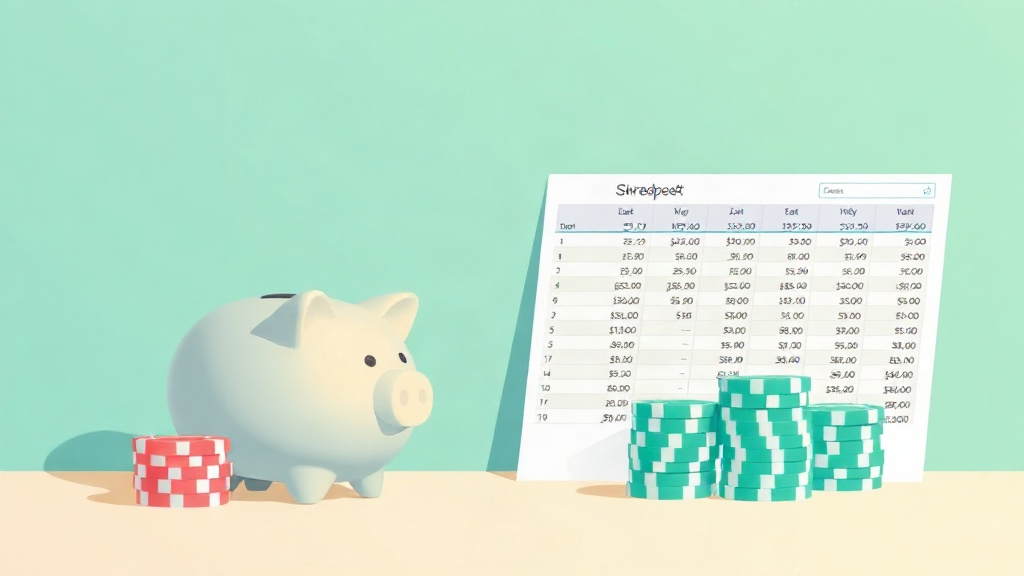
A Google Sheet or Excel file is all you need. Set up these columns:
Date | Casino | Game | Buy-in | Cash-out | Net | Time | Notes
At the bottom, add three summary rows:
- Weekly total = sum of Net column for the current week
- Monthly total = sum of Net column for the current month
- Average session result = monthly total ÷ number of sessions
Example entries:
- Sep 1 | PlayOJO | Slots | C$50 | C$35 | -C$15 | 45 min | “Played Starburst, hit nothing”
- Sep 3 | bet365 | Sports | C$25 | C$62 | +C$37 | 10 min | “Leafs parlay hit”
- Sep 7 | OLG | Blackjack | C$100 | C$0 | -C$100 | 2h | “Bad session, kept doubling down”
After one month, the spreadsheet tells a story. In this example: 3 sessions, net -C$78, average loss -C$26 per session. That’s data you can act on.
Method 2: Casino Built-In Tools
Most Canadian regulated platforms offer tracking features you might not know about:
- OLG (Ontario): Transaction history showing all deposits, withdrawals, and game activity. Deposit limits on daily, weekly, and monthly basis. Session time reminders at configurable intervals.
- PlayNow (BC): Account history covering up to six months of gameplay and payments. Session logs with cash spent during each play period. GameSense tools including reality checks.
- Proline+ (Ontario): Betting history with detailed wager tracking. Self-imposed limits on deposits and losses.
- bet365, FanDuel, BetMGM (Ontario-regulated): Transaction history, time-out features, and session reminders. Some offer downloadable CSV files of your activity.
The limitation: these tools only cover one platform. If you play at three different casinos, you need a personal log to consolidate. The casino’s tools are supplements, not replacements.
Method 3: Dedicated Apps
Several apps are designed specifically for tracking gambling sessions:
- Gambling Tracker (iOS/Android): Log sessions by game type, track bankroll over time, view charts of win/loss trends. Free with premium features.
- Poker Bankroll Tracker: Built for poker players but works for any gambling. Tracks sessions, stakes, locations, and generates detailed reports.
- General budget apps (YNAB, Mint/Credit Karma, Goodbudget): Create a “Gambling” category and log every deposit. Won’t track individual sessions but captures overall spending alongside your other finances.
The best tool is the one you’ll actually use. A scribbled notebook beside your computer beats a sophisticated app you never open.
Warning Signs to Watch For in Your Data
After a month of tracking, look for these patterns:
- Increasing deposit frequency. Going from twice a month to twice a week is a red flag, even if individual amounts stay small.
- Sessions getting longer. If your average session creeps from 45 minutes to 3 hours, you’re spending more time and almost certainly more money.
- Chasing patterns. Depositing again within hours of a losing session. Your notes will show this — “deposited C$50 to win back what I lost.”
- Net losses exceeding your budget. If you set a C$200 monthly budget and you’re at -C$350 by the 15th, the data is telling you something important.
- Playing more during stress. If your notes consistently link sessions to arguments, work stress, or loneliness, gambling may be serving as a coping mechanism rather than entertainment.
None of these patterns mean you have a gambling problem on their own. But each one is a signal worth paying attention to — and you won’t see any of them without tracking.
How to Start Today
If you play tonight, log it. Open your phone’s notes app or a fresh spreadsheet and record: date, casino, game, how much you put in, how much you took out, how long you played. That’s it. Five fields, one minute.
After a week, add a summary row. After a month, review the total. You’ll either confirm that your gambling is a manageable entertainment expense — or you’ll see something that needs to change. Either way, you’ll know. And knowing is the entire point.
Helpful Resources for Canadian Players
If tracking reveals that your gambling spending is beyond what you’re comfortable with, these Canadian resources offer free, confidential help:
- ConnexOntario: 1-866-531-2600 (Ontario residents)
- GameSense (BC): Available at all BCLC locations and PlayNow.com
- Alberta Gambling Helpline: 1-866-461-1259
- Gambling, Alcohol & Drugs Helpline (Quebec): 1-800-461-0140
- Canadian Centre on Substance Use and Addiction: ccsa.ca
There’s no shame in asking for help. The fact that you’re tracking in the first place means you’re already more aware than most players.
Where to Play
Ready to put this knowledge into practice? See my tested guides on Interac e-Transfer casinos, Canadian casinos that accept PayPal, and eCheck casinos in Canada to find a trusted site.